Choosing an electronic health record software company is one of the most significant technology decisions a New Zealand medical practice will make. The platform you select will shape how your clinicians document care, how your administrative team processes billing, and how your patients experience their care journey. Getting this decision right has long-term consequences for both clinical outcomes and practice performance.
New Zealand practices have access to a range of EHR software options, from locally developed platforms built with the NZ health system in mind to international platforms that have been adapted for the local market. This guide helps you understand what to look for, what questions to ask, and how to evaluate electronic health record software companies in a way that leads to a confident, well-informed decision.
Best EHR Systems: What Defines Quality in the New Zealand Context
The best EHR systems for New Zealand practices share several defining characteristics. They are designed for the specific workflows of general practice and specialist care rather than being generic data management tools with healthcare modules bolted on. They support ACC billing natively, integrate with New Zealand health funding systems, and comply with the Health Information Privacy Code that governs how patient information must be managed.
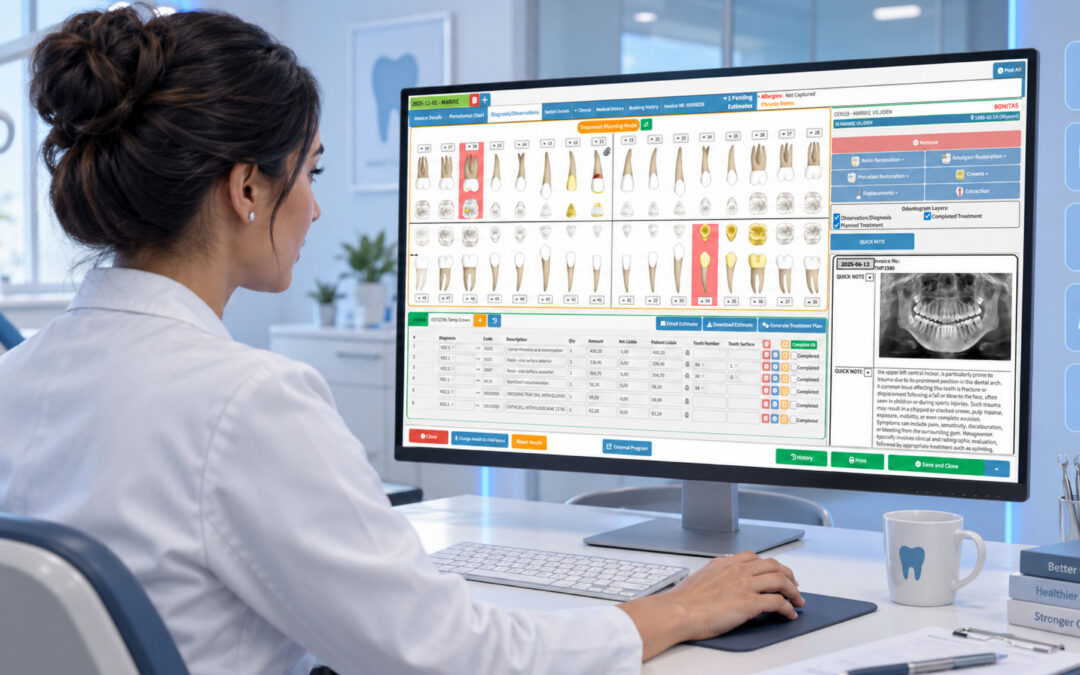
Clinical functionality matters enormously. The system should make it easy for providers to document consultations efficiently, prescribe medications with appropriate safety checks, order and receive lab results electronically, and maintain a longitudinal patient record that builds value over time. Slow documentation workflows are a major source of clinician dissatisfaction and contribute to burnout, particularly in high-volume GP practices.
The Health Information Standards Organisation New Zealand maintains national standards for health information systems in New Zealand. EHR software companies operating in the NZ market are expected to align with these standards, particularly around data interoperability and patient privacy protections.
Integration capability is another key quality indicator. A strong EHR system connects with laboratory information systems, pharmacy platforms, referral networks, and practice management tools. These connections reduce manual re-entry of information, speed up clinical workflows, and improve the accuracy of patient records across the care continuum.
GoodX: Integrated Health Records and Practice Management for New Zealand
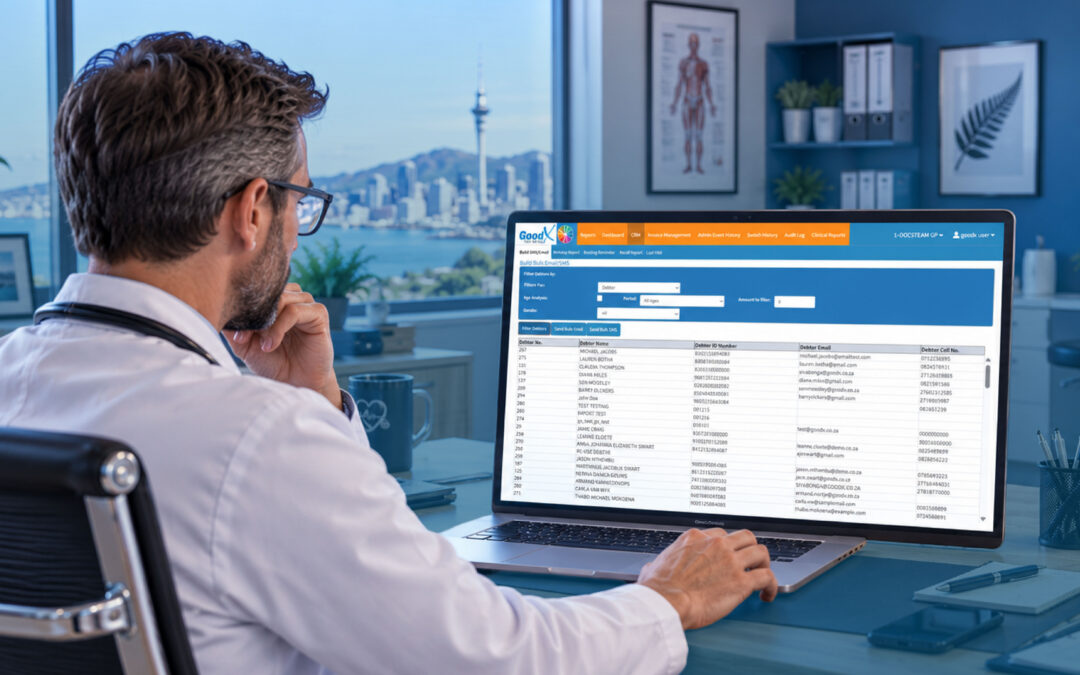
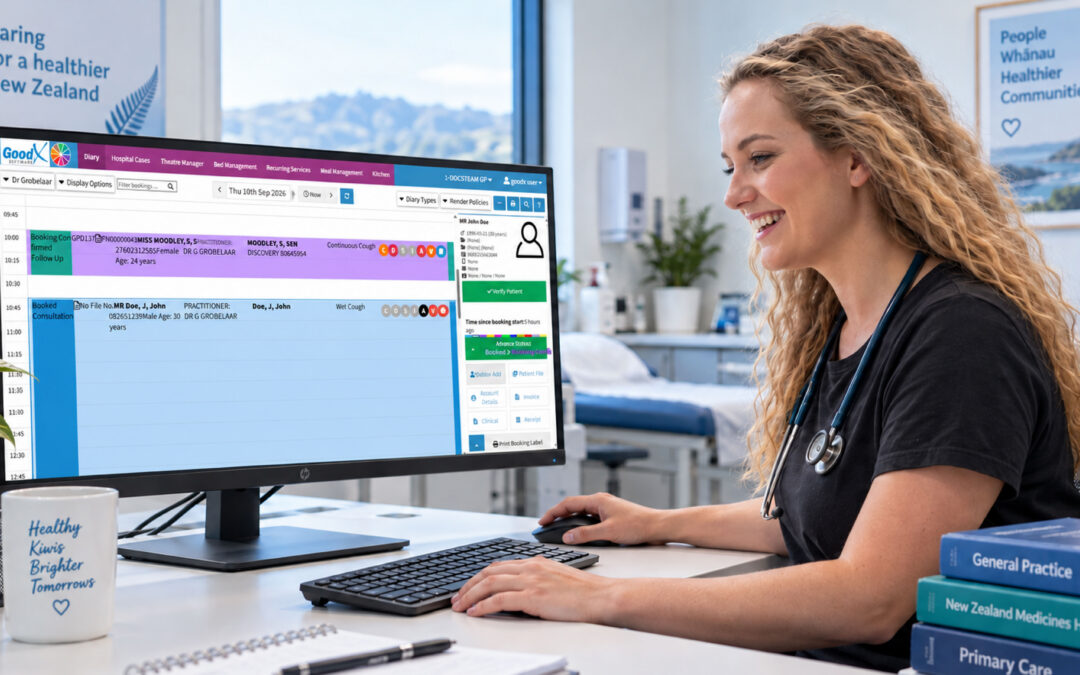
GoodX is a practice management and financial software platform used by medical practices across multiple countries, including New Zealand. The platform is built with a dual focus: delivering strong clinical record management alongside comprehensive practice and financial management tools. For NZ practices that want a single integrated platform rather than multiple systems that need to be reconciled, GoodX offers a compelling option.
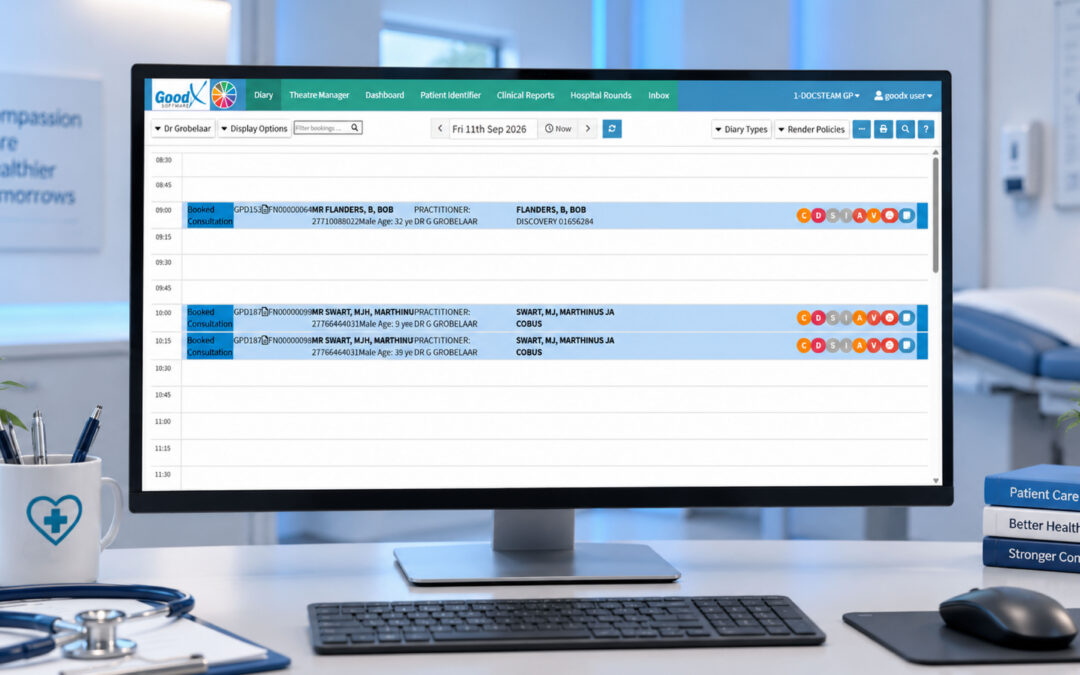
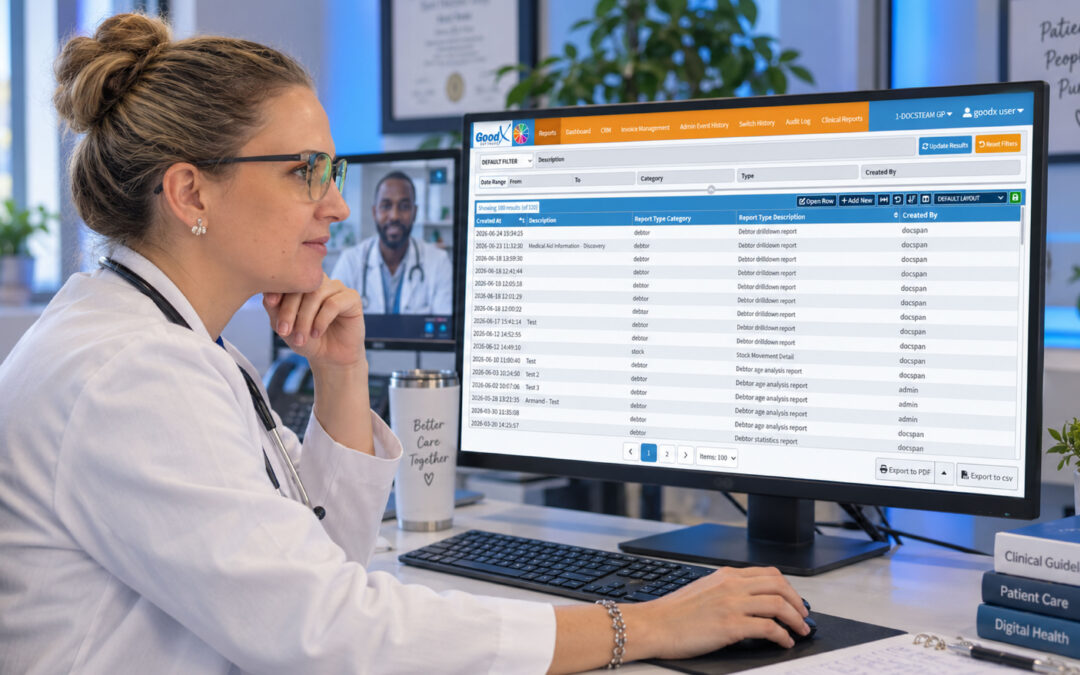
The platform supports the full practice workflow from appointment booking through to payment reconciliation. Clinical records, billing, scheduling, and financial reporting are managed in one environment, which reduces the administrative overhead that comes with managing disconnected systems. Practice managers have real-time visibility into both clinical activity and financial performance from a single dashboard.
For specialist practices, GoodX also supports the management of complex patient populations and multi-provider settings. The platform’s billing module handles a range of funding types relevant to New Zealand practice, including private billing and third-party payer claims, with reporting tools that help practices monitor outstanding balances and identify billing trends.
Evaluating Electronic Health Record Software Companies: A Framework
When evaluating electronic health record software companies, use a structured framework rather than reacting to vendor demonstrations. Start with your non-negotiables: the features or integrations your practice cannot operate without. From there, identify your strong preferences and your nice-to-haves. This structure prevents you from being swayed by impressive-looking features that your practice will rarely use.
Request demonstrations that mirror your actual workflows. Ask the vendor to show you specifically how a GP consultation flows from booking to documentation to billing, or how a specialist referral letter is generated and sent. Seeing your real workflows in the software gives you a much more accurate sense of fit than a generic product tour.
The Royal New Zealand College of General Practitioners provides resources for general practitioners navigating practice technology decisions, including guidance on selecting clinical systems that support quality primary care delivery in New Zealand.
Ask each vendor about their update and maintenance process, their customer support model, and how they handle regulatory changes that affect EHR requirements in New Zealand. Software companies that are actively engaged with the NZ health sector and keep their platforms current with local requirements are more reliable long-term partners than those treating New Zealand as a secondary market.
Data Migration and Implementation Planning
Switching EHR providers involves migrating your patient data from the old system to the new one. This process requires careful planning to ensure that historical records, prescribing histories, and clinical notes are preserved accurately. Before committing to a new platform, confirm that the vendor has a clear data migration plan and that your current data can be exported in a compatible format.
Implementation timelines vary by practice size and complexity. Smaller practices can often complete an EHR transition in a few weeks, while larger multi-provider clinics may need several months of phased rollout. Budget for a period of parallel running where both old and new systems are active, and plan your transition for a lower-volume period in your practice calendar if possible.
Frequently Asked Questions
What should I look for in an electronic health record software company?
Look for a company that has demonstrable experience in the New Zealand health market, offers software that integrates clinical records with billing and practice management, and provides strong local support. The platform should comply with New Zealand Ministry of Health information privacy standards and support ACC billing workflows that are specific to the NZ funding environment.
What are the best EHR systems for New Zealand practices?
The best EHR systems for New Zealand practices combine clinical documentation, ACC billing, laboratory integration, and practice management in one platform. Evaluation should focus on workflow fit for your specific practice type, the quality of local vendor support, and alignment with New Zealand health information standards and privacy requirements.
How does GoodX compare to other EHR software companies?
GoodX differentiates itself through deep integration between clinical records and financial management, making it particularly suitable for practices that want a single platform for both care delivery and business operations. The platform is used across multiple international markets and offers New Zealand practices a proven, feature-rich solution with local support.
How long does it take to switch EHR systems in a NZ practice?
A practice EHR transition typically takes between four and twelve weeks depending on practice size, data migration complexity, and staff training requirements. Planning the transition during a lower-activity period, investing in training before go-live, and running both systems in parallel during the transition period all help reduce disruption to clinical operations.
Do EHR systems in New Zealand need to comply with privacy laws?
Yes. EHR systems used in New Zealand must comply with the Health Information Privacy Code under the Privacy Act, which sets rules for how health information is collected, stored, and shared. All reputable electronic health record software companies operating in the NZ market build their platforms to meet these requirements.
See What GoodX Offers New Zealand Practices
Finding the right electronic health record software company means finding a partner that understands the New Zealand health environment and delivers software your team will actually want to use. GoodX provides New Zealand practices with an integrated, healthcare-specific platform covering clinical records, billing, and practice management.