Every patient encounter in a New Zealand medical practice generates information — symptoms described, findings examined, diagnoses considered, and plans agreed. How that information is captured shapes everything that follows it: continuity of care, billing accuracy, audit readiness, and the legal defensibility of the record itself.
SOAP notes have remained the gold standard for clinical documentation for more than fifty years, and for good reason. The four-section structure — Subjective, Objective, Assessment, Plan — mirrors the way clinicians actually think through a consultation. When that structure is embedded directly into clinical software rather than typed into free-text boxes or scribbled onto paper, the benefits compound across the entire practice.
This article looks at why SOAP notes still matter for New Zealand medical practices in 2026, and what changes when structured notes become part of your day-to-day clinical software.
A Quick Refresher on SOAP
SOAP stands for Subjective, Objective, Assessment, and Plan. The format was developed by Dr Lawrence Weed at the University of Vermont in the late 1960s as part of his Problem-Oriented Medical Record framework, and it has since become the most widely adopted method of clinical documentation in the world. As the National Library of Medicine notes in its StatPearls reference on SOAP documentation, the format works because it provides both a checklist and a cognitive framework for clinical reasoning.
Here is what sits inside each section:
- Subjective captures the patient’s own account of their presenting issue — symptoms, onset, severity, frequency, and relevant family, social, and medical history.
- Objective records measurable findings — vital signs, examination results, allergies, lab work, and imaging.
- Assessment documents the clinician’s interpretation — diagnosis, differentials, response to treatment, and progress.
- Plan sets out next steps — medications, procedures, referrals, follow-ups, and patient education.
The discipline of the format is what gives it staying power. Every clinician reading a SOAP note knows exactly where to look for what they need.
Creating a Consistent Clinical Documentation Workflow
Traditional patient record-keeping, particularly anything still done on paper or in unstructured free-text fields, is prone to inconsistency. Handwriting varies. Sections get skipped. Critical observations end up buried in narrative paragraphs that the next clinician has no time to read carefully. Manual entry also eats time that should be spent with the patient.
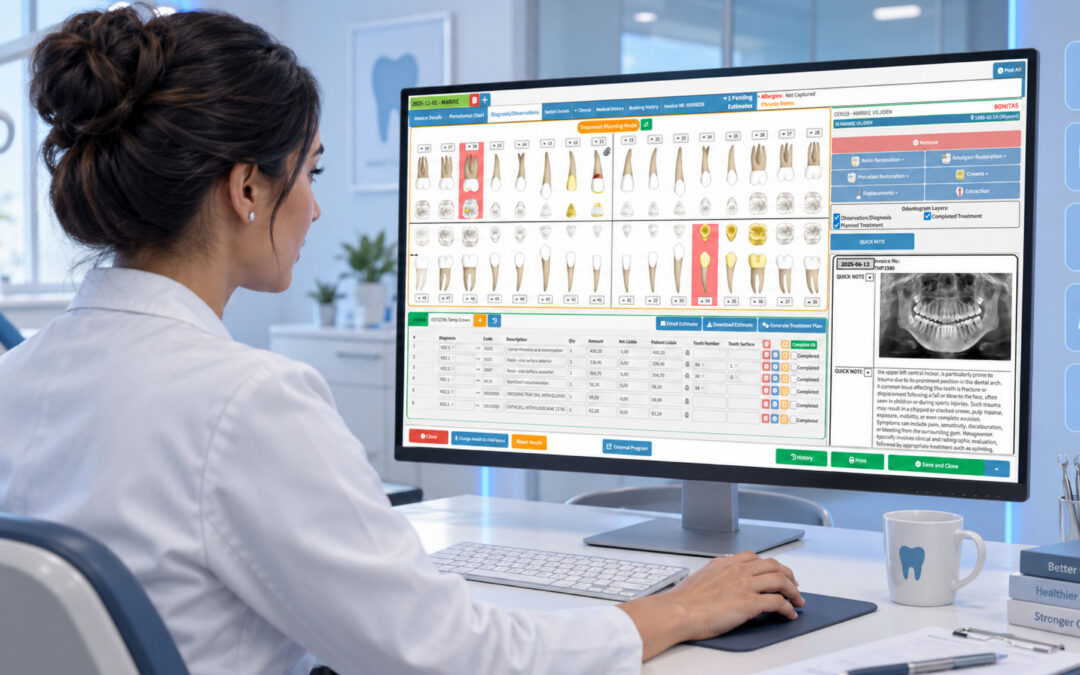
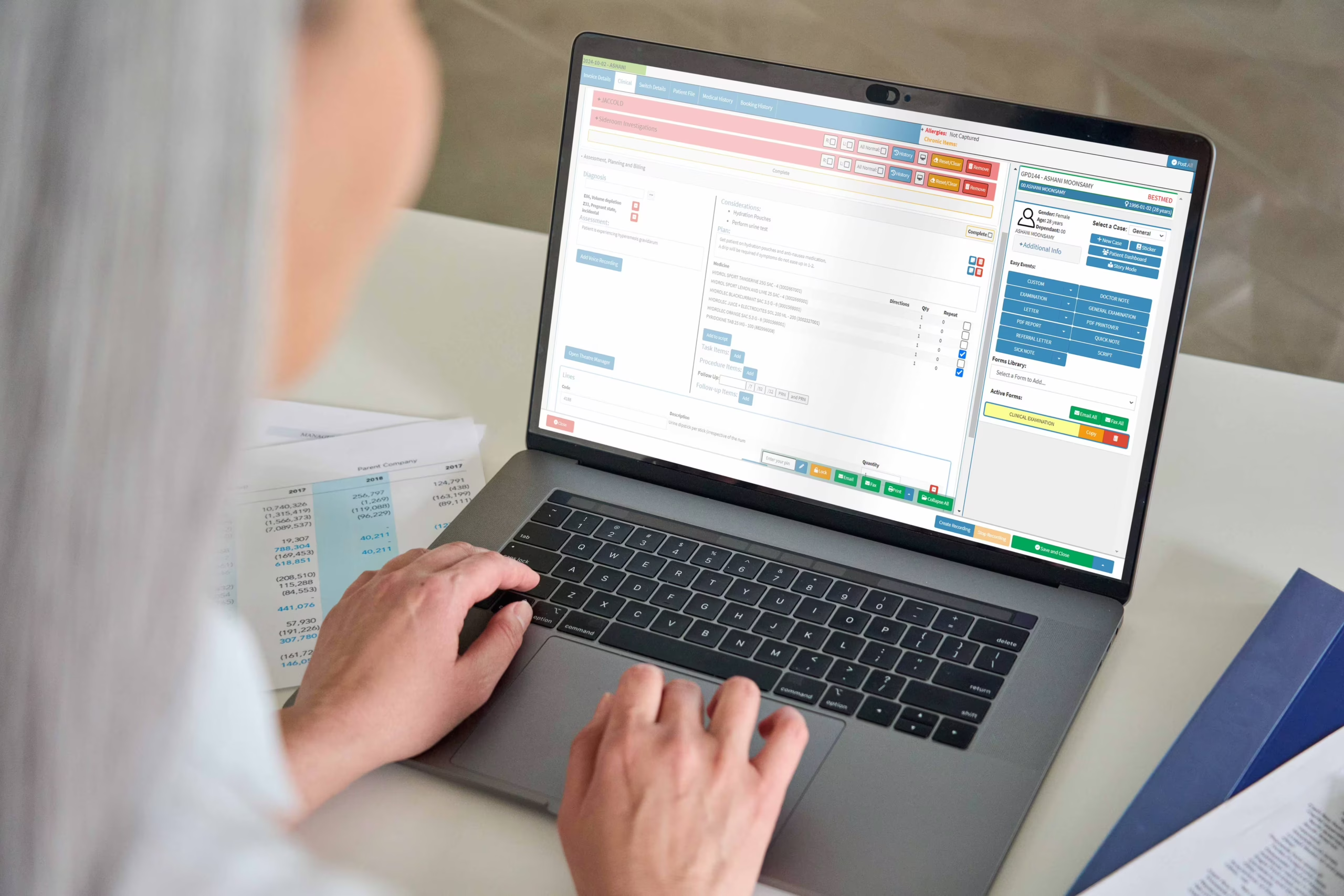
Embedding SOAP note templates into clinical software changes this. With predefined fields for each section of the patient encounter, clinicians can move through documentation in a way that mirrors how they consult, capturing every key detail in an organised, repeatable format. Voice-to-text and template defaults can speed entry further without sacrificing structure.
The result is a documentation workflow that produces complete clinical records, faster, and a smoother handover between any clinicians sharing care of the same patient.
Enabling Real-Time Collaboration Across the Care Team
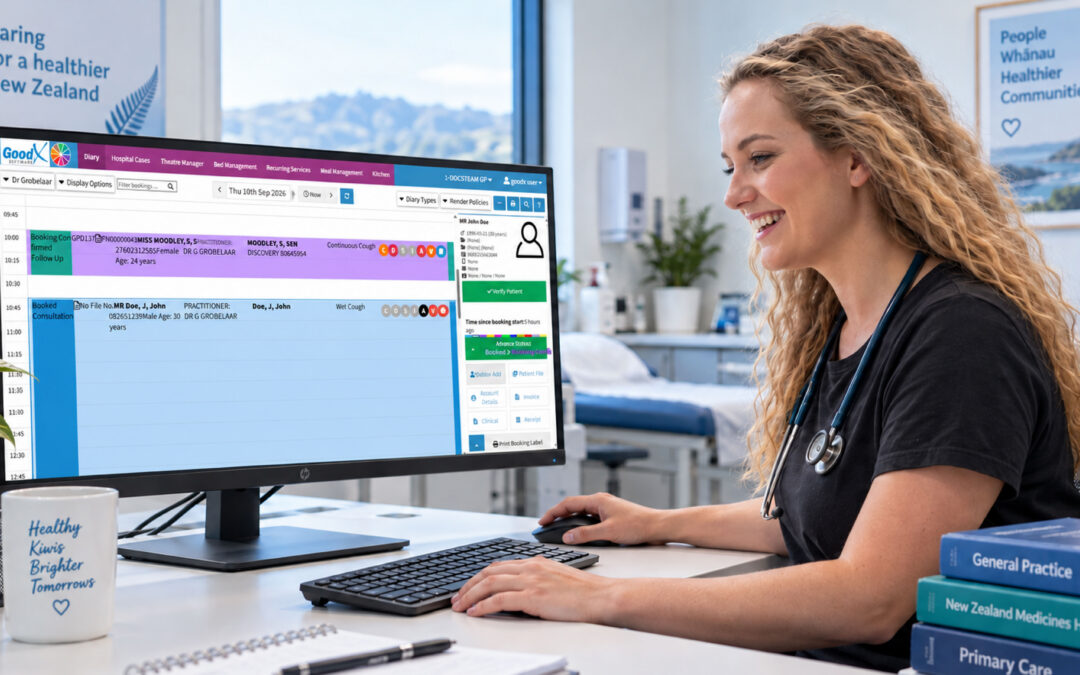
Coordinated care depends on every clinician seeing the same picture. When SOAP notes live in a shared clinical system, the entire care team, GPs, nurses, specialists, allied health practitioners, and administrative staff, can access the same up-to-date record in real time, with no waiting for paper files or chasing colleagues for handover notes.
This matters most at the moments that often go wrong in busy practices. A specialist reviewing a referral can see the full clinical reasoning behind it. A nurse triaging a returning patient can read the previous Plan section in seconds. A locum stepping in for the afternoon has the same context as the regular GP. When everyone is working from the same structured record, decisions get made faster and care stays joined up.
For practices delivering electronic referrals or sharing summaries through national systems, structured SOAP notes also make the data far easier to extract and share cleanly across the broader New Zealand health ecosystem, including links into Te Whatu Ora (Health New Zealand) services and primary health organisation reporting.
Supporting Smarter, Safer Clinical Decision-Making
Accurate, structured documentation is the foundation of sound clinical judgement. SOAP notes give clinicians a chronological, organised way to track a patient’s progress over time, making it easier to spot subtle changes, identify trends, and adjust treatment plans as evidence accumulates. When those notes live inside a clinical software platform, they become part of a larger searchable record that can support outcomes tracking, recall management, and quality review.
Many modern clinical software platforms layer decision-support features directly onto SOAP-structured records. These can flag drug interactions, prompt for missing investigations, or surface relevant clinical guidelines based on the current Assessment. None of these tools replace clinical judgement, they support it, by ensuring the right information surfaces at the right moment.
That kind of patient data management is also what powers meaningful audit. When a practice can search across structured Assessment fields, it can answer real clinical governance questions: Which patients haven’t had their diabetes review this year? Are we documenting consent consistently? Where are we trending on a particular outcome? Free-text records can’t answer those questions reliably. Structured ones can.
Boosting Practice Efficiency and Reducing Administrative Load
Documentation is one of the largest contributors to clinician administrative burden. By replacing repeated manual entry with structured templates, integrated clinical software gives time back, time that goes into patient engagement, treatment planning, and the parts of practice that humans need to do.
Beyond the notes themselves, integrated systems automate the surrounding workflow: appointment reminders, prescription refills, recall scheduling, follow-up tasks generated directly from the Plan section. When the same platform also handles medical billing, structured notes feed directly into accurate coding and clean claim submission, helping ensure that the procedures performed match what gets billed. Fewer rejected claims, fewer rework cycles, steadier revenue flow.
For solo GPs and small practice teams in particular, that compound effect, better notes, smoother workflow, cleaner billing, is often the difference between feeling on top of the practice and feeling buried by it.
Meeting Compliance Obligations Under New Zealand Privacy Law
Health information is among the most sensitive personal data a practice handles, and New Zealand has a specific, layered framework governing how it must be managed. The Privacy Act 2020 sets the baseline, and the Health Information Privacy Code 2020, issued by the Office of the Privacy Commissioner, adds health-specific rules on top, covering how health agencies collect, hold, use, and disclose information about identifiable individuals.
Integrating SOAP notes into secure clinical software directly supports compliance with this framework. Structured records make it easier to demonstrate that information is collected purposefully, stored securely, accessed only by authorised users, and disclosed appropriately. Good clinical software builds in the technical safeguards the Code expects, encryption in transit and at rest, role-based access controls, multi-factor authentication, and detailed audit logs that record who accessed what record and when.
Practices that document into unstructured systems or local paper files carry a far higher compliance and breach risk. Structured digital records, properly secured, are simply easier to defend, both clinically and legally.
The Future of Patient Care Starts With Smarter Documentation
For New Zealand medical practices aiming to deliver better care, reduce administrative drag, and stay on the right side of regulatory obligations, integrating SOAP notes into clinical software is one of the most practical steps available. The format itself isn’t new, what’s new is what becomes possible when that structure is woven directly into a modern practice management platform rather than bolted on as an afterthought.
Clearer documentation. Faster collaboration. Smarter decision support. Easier compliance. Better-coded billing. None of these are separate wins, they’re all downstream of the same foundation: structured clinical notes inside a system designed to use them properly.
As the broader New Zealand healthcare environment continues to evolve toward more connected, data-driven care, practices working from structured documentation will be the ones best positioned to adapt. The SOAP note is fifty years old. Built into the right software, it’s still one of the most forward-looking tools in clinical practice.
Frequently Asked Questions About SOAP Notes
What does SOAP stand for in clinical documentation?
SOAP is an acronym for Subjective, Objective, Assessment, and Plan. It is a structured method of clinical documentation developed by Dr Lawrence Weed in the 1960s. Each section captures a specific part of the patient encounter, giving clinicians a consistent framework for recording symptoms, findings, diagnoses, and treatment plans across every consultation.
Why are SOAP notes important for medical practices?
SOAP notes matter because they bring consistency and clarity to clinical documentation. They ensure every key detail of a patient encounter is captured in a predictable order, support better continuity of care between clinicians, reduce documentation errors, and provide a defensible, searchable record that underpins quality, compliance, and accurate medical billing.
How does clinical software improve SOAP note documentation?
Clinical software replaces manual or paper-based note-taking with structured digital templates that mirror the SOAP format. This speeds up entry, ensures completeness, makes records instantly accessible across the care team, and connects notes directly to billing, recall, and decision-support workflows, turning documentation into a productive part of practice rather than an administrative burden.
Are SOAP notes compliant with New Zealand health privacy rules?
SOAP notes themselves are a documentation format, not a compliance product, but when captured in secure clinical software with proper access controls, encryption, and audit logs, they directly support obligations under the Privacy Act 2020 and the Health Information Privacy Code 2020. Structured digital records are generally easier to secure and defend than paper or free-text alternatives.
Can SOAP notes be used across different clinical specialties?
Yes. SOAP notes are used across general practice, allied health, dental, mental health, specialist medicine, and many other clinical disciplines in New Zealand. The four-section framework is universal, but the language, clinical emphasis, and detail captured in each section adapt naturally to the specialty, which is part of why the format has remained the global standard for so long.
Ready to See SOAP Notes Working in Practice?
If you’d like to see how GoodX makes structured SOAP note documentation effortless, and how it connects into the rest of your practice workflow, book a free, no-obligation demo with our New Zealand team. We’ll show you exactly how clinical notes, scheduling, patient records, and billing work together inside one platform built for modern medical practices.